
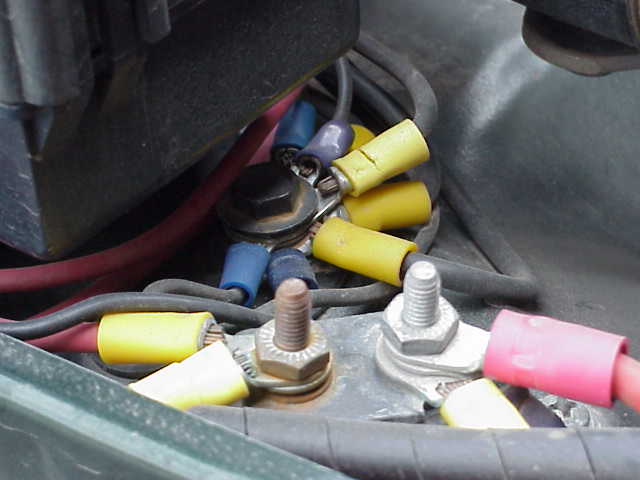
Ever have something like this appear under your hood? It happens from time to time when we do those quickie electrical projects….and we promise ourselves that we will straighten things up once we get a little time when we get under the hood again. Yeah right!!!
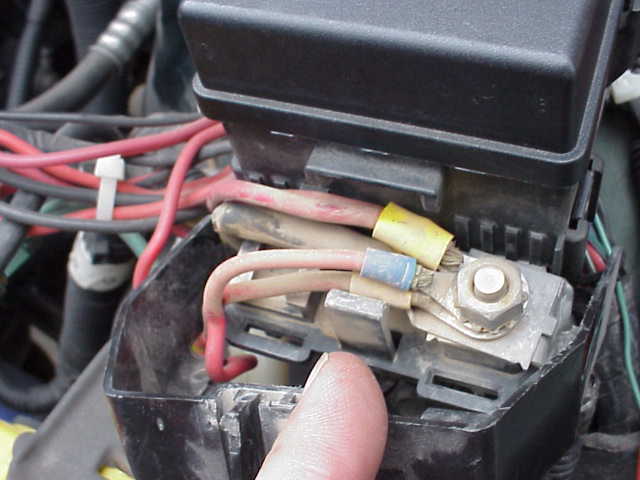
Or maybe something like this?
If your answer was yes, then it is time for you to get an auxiliary fuse block to power the many add-on electrical circuits that our Jeeps always seem to acquire and reduce the under-hood wiring nightmare that these projects often cause. Over the years, since I got my TJ, I’ve add electrical circuits for a couple of ham radio installs, a CB, a GPS receiver, a 110 VAC inverter, the Quick Air 2 compressor, some rock lights, an ARB compressor, the TWC, and a couple of others that I’ve probably forgot about. Piggy backing electrical circuits off of the main power feeds is a common problem….and worse are the ones that all come right off of the battery terminals, making it a real problem when you want to hook up a pair of jumper cables or just remove the battery.
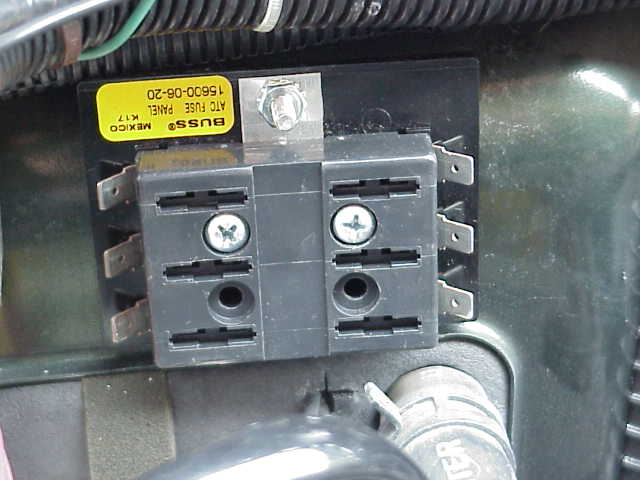
Brad, a good Jeepin’ buddy of mine, came to the rescue one day when he stopped by with a Buss brand fuse block that was destined to be mounted in the engine compartment in an attempt to help clean up those power taps coming off of the power distribution center (shown in the above pictures). Unlike some of the fuse blocks available from such companies as Painless Performance, this holder does not have any power relays or provisions for ignition switching. However, the cost is a fraction of those units and I didn’t need the added functionality so the Buss unit was just what I needed.
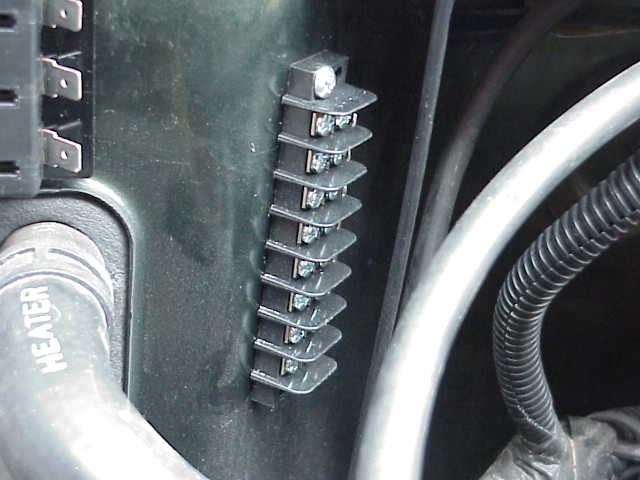
I decided to mount a terminal strip for the electrical grounds (the black wires from the circuits I had ran) near the fuse block. The terminal strip came from the local Radio Shack store. Both the fuse block and terminal strip were mounted on the passenger side of the firewall, near the point where the heater hoses pass through.
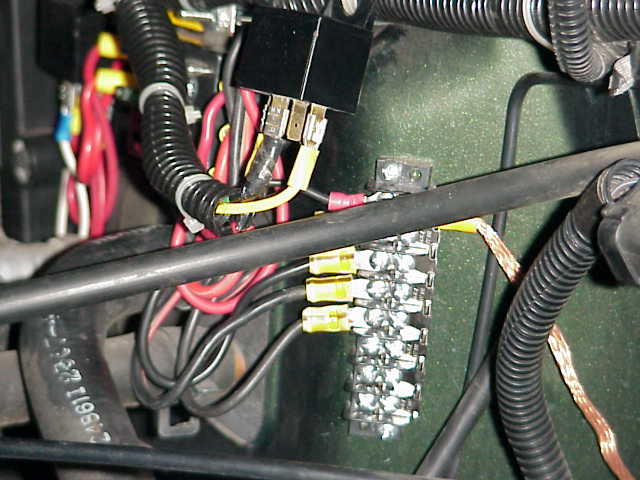
The terminal strip has a shorting bar that connects all of the contacts on one side together. In the above picture, you can see the large copper braided cable coming from the top of the terminal strip. This large ground wire goes to a common ground point on the firewall that other circuits in the engine compartment use. A heavy 8 gauge jumper wire was ran from the power distribution center to the main power terminal.
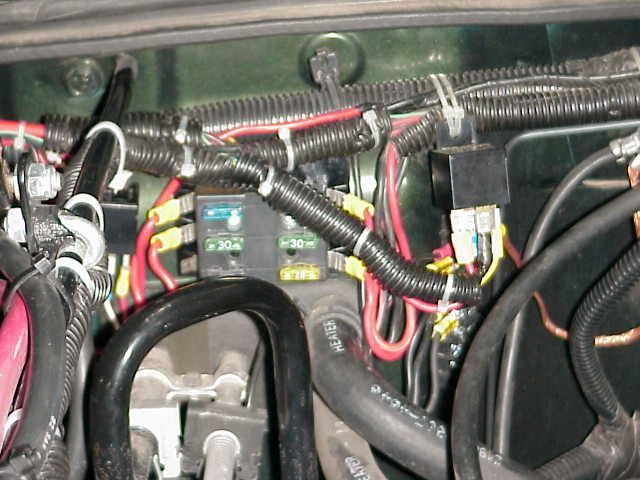
Here is a picture of the fuse block with fuses installed and wires connected to the power tap terminals. Things are still rather “busy” in the near vicinity of the fuse block and terminal strip but the maze of add-on wires at the power distribution center looks much better.
There are lots of ways to wire in an aux fuse block. This is but one of them and it hopefully gives you an idea of what you can do with your wiring nightmare (assuming you have one).
Note: I finally got around to installing some 12V relay sockets on those relays shown in the above pictures.