
After the addition of the 35″ tires, I decided it was time to upgrade the steering stabilizer. The factory one was designed for those little factory tires and I was not expecting it to perform as well as it should on the MT/Rs. Besides, it had held the 32″ BFG MTs in place for the previous year and I decided it was time to retire the OEM stabilizer.
I dropped a note on the local Arizona Virtual Jeep Club (AZ-VJC) e-mail reflector and got a dozen responses within a couple of hours. The Rancho RS-5000 seemed to be the most popular aftermarket replacement so I decided to give it a try. Saturday morning found me down at the local 4×5 shop just after they opened up. I gave the man a bit less than $40 and I was out the door with a new RS-500 with a lifetime warranty. The Rancho unit also comes with new mounting hardware (for the drag link end of the unit). You will need to recycle the axle bracket bolt. At least that bolt is not a Torx brand!
The Rancho RS-5000 stabilizer part number is RS 5407.
Besides the recommendations on which stabilizer to get, one of the VJC folks also mentioned that I should use a pitman arm puller to separate the OEM stabilizer from the drag link. The bolt that holds them together is tapered and these can often times be a pain if you don’t have the right tools to handle them. On the way back from the 4×4 shop, I stopped by an Autozone store and rented a puller (they rent them for free….you just have to put down a deposit which is then refunded when you return the tool).
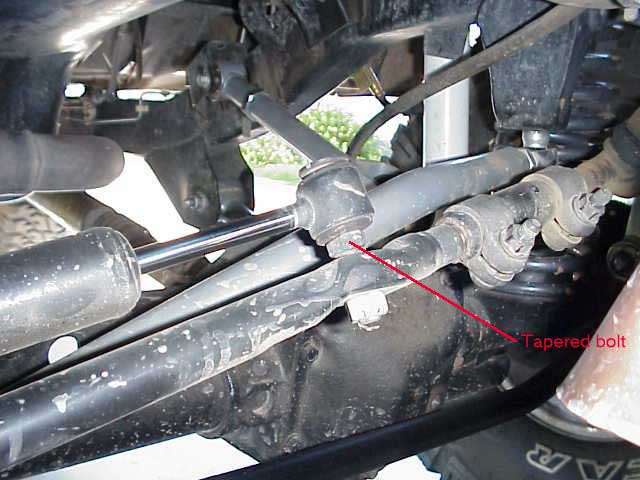
Here is a picture of the bolt you will have to deal with. Since I hate banging my knuckles against everything, I was glad to have the heads up from my VJC friend.
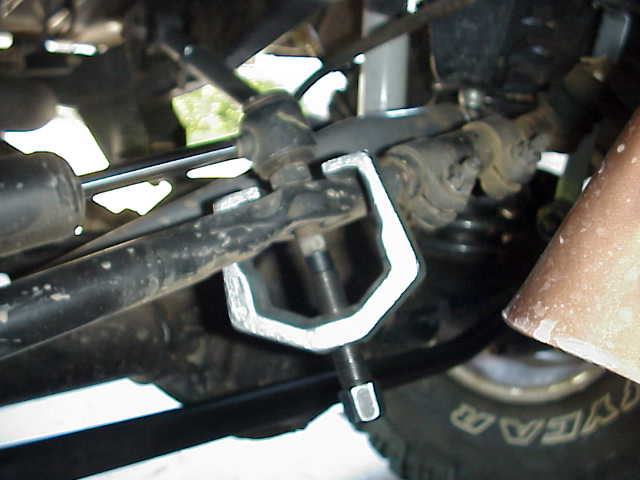
Here is a picture of the pitman arm puller in place and ready to do the dirty work. I have already removed the cotter pin and the retaining nut from the end of the bolt. I started to put the muscle to the puller, using a big crescent wrench for some good leverage. All of a sudden, everything just kind of exploded and the the puller was laying on the floor. I thought I had broken it, as this is fairly common with these pullers (and these are not the highest quality units). I checked the puller and it was fine. Thinking now that the puller arms had slipped off of the drag link, I started to put it back on when I realized that the bolt was out of the hole. When it let go, there was enough energy built up that it popped clear of the mounting hole. A couple more minutes finding the right size wrench and socket and I had the other end of the OEM stabilizer removed from the axle end bracket.
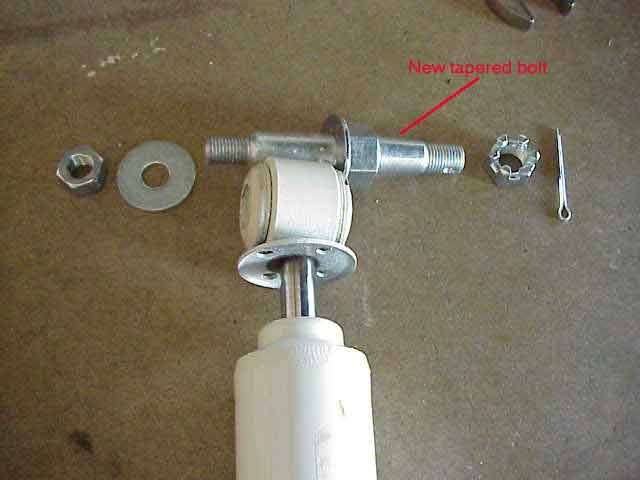
Here is the drag link end of the Rancho stabilizer along with its new mounting hardware. The non-tapered end of the bolt goes through the stabilizer mounting eye and the washer and nut are secured in place. Rancho says to torque this nut to 30 ft. lbs., which I did.
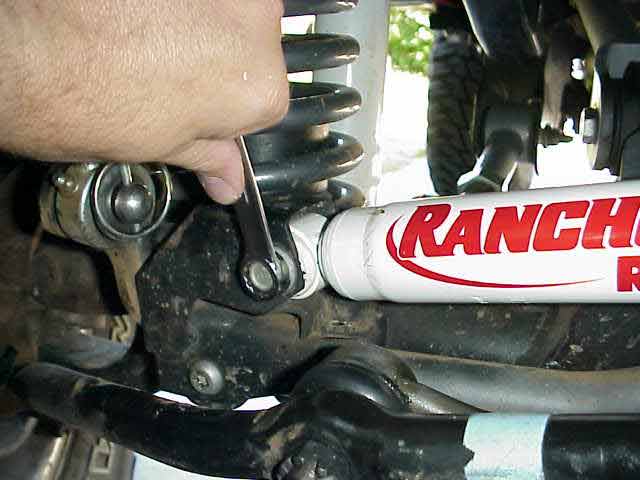
With the new mounting bolt at the drag link end in place, I secured the other end of the stabilizer in the bracket. There is a metal sleeve that fits snugly in the rubber bushing. Don’t forget to slip it into the bushing before you push the stabilizer into the mounting bracket. Now is also a good time to remember to slide the rubber boot over the piston end of the stabilizer, if you are going to use it. Although I don’t have them on my RS-9000 shocks, I decided to put one here.
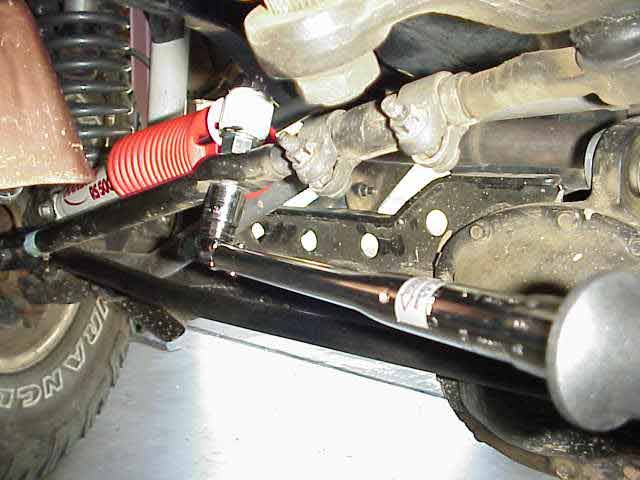
With one end of the Rancho now mounted in the axle bracket, I pulled the stabilizer apart (not an easy task by the way) so I could align the tapered bolt with the drag link hole. I pushed the bolt into the hold and snugged it down. With the torque wrench, I tightened the nut to 35 ft. lbs (Rancho specs) and then, as their directions indicated, just a bit more until the cotter key hole lined up with a pair of notches in the bolt. I slipped the cotter key in place and bent it over.
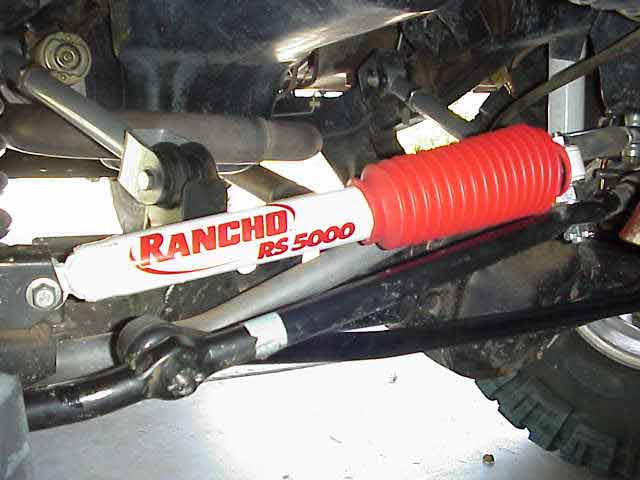
Here is the finished product, ready to go. This will do a much better job of keeping those MT/Rs pointed in the right direction! Once I was done with this, I did an oil change and a chassis lube….even broke down and changed the pre-filter on the K&N air filter. Wow, Lady didn’t know what hit her this morning!